4th of July Patriotic USA Flag
As a designer who’s stitched over 200 holiday-themed embroidery files for clients—from boutique aprons to Etsy baby onesies—I opened the 4th of July Patriotic USA Flag bundle with quiet expectations. Not hype. Not hope. Just curiosity: does this design hold up when translated from screen to stitch, and more importantly, does it serve real people making real things?
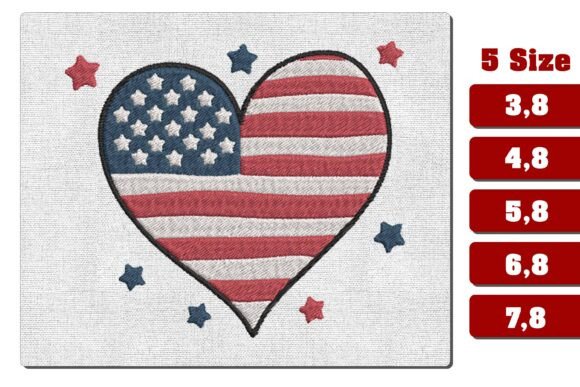
I tested it on a natural cotton canvas tote bag—something I regularly embroider for local farmers’ markets—and the first thing that struck me wasn’t the red, white, and blue, but the clarity. The flag outline is clean and confident—not overly detailed, not cartoonish—just balanced enough to read instantly at 3–4 inches tall. That matters. When you’re stitching for small shops or holiday pop-ups, recognition happens in under two seconds. This design delivers that.
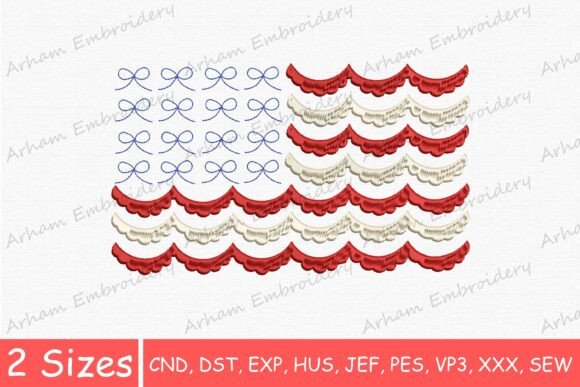
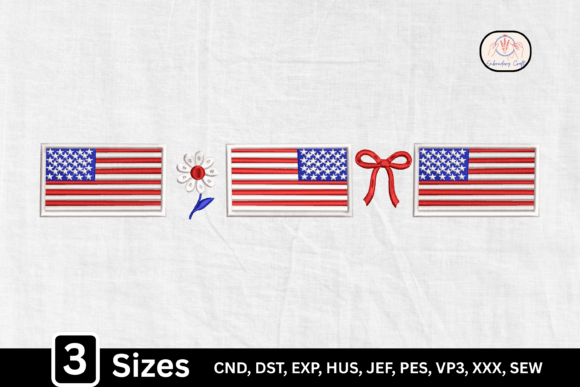
The bundle includes variations with bow and daisy accents, which adds versatility—but let’s be honest: the core 4th of July Patriotic USA Flag stands strongest on its own. It avoids visual clutter, keeps stitch density moderate (no dense fill-stitch oceans that pucker thin fabrics), and uses satin stitch sparingly—only where needed for crisp edges on stars and stripes. That restraint makes it unusually adaptable across project types.
For custom apparel? It works cleanly on midweight sweatshirts and structured tees. I ran it on a navy French terry hoodie—used tear-away + light cutaway stabilizer—and the stars held shape without stiffness. On lighter cotton tees? I’d drop one stitch density level and add a layer of soft cutaway underneath. No surprises, no re-hooping.
Where it shines most is in handmade product contexts that rely on authenticity over flash: embroidered kitchen towels for a small-town gift shop, pillow covers for nursery decor, or patches sewn onto denim jackets for teen customers. One client recently used it as a center motif on a linen baby blanket—tiny 2.5-inch version, scaled down carefully—and the proportions stayed legible. That’s rare with flag designs, which often collapse into muddy blocks at smaller sizes.
But here’s where attention matters: 4th of July Patriotic USA Flag isn’t built for ultra-fine detail work. Don’t push it below 2 inches wide unless you’ve tested it thoroughly on your machine. Tiny stars lose definition on stretchy knits or textured toweling. And while the bow-and-daisy versions are charming, they add delicate running-stitch stems and small petals—details that can snag or fray after repeated washing. For baby embroidery or kitchen towels meant for daily use, stick with the clean flag-only file.
Dark fabric is where this design earns respect. The contrast between white stars and deep navy or black thread reads strongly—even in low-light mockups. I checked it in grayscale printable mockups for my Etsy listings, and it held presence without relying on color. That’s valuable for digital embroidery file sellers who need consistent previews across devices and platforms.
Fabric texture changes everything—and this design handles variation well. On slubbed linen tea towels? Yes. On smooth quilting cotton? Yes. On brushed twill caps? With caution: I’d avoid the daisy-accented version entirely on curved surfaces. The base flag, hooped with a cap frame and medium-weight stabilizer, stitched cleanly on a baseball cap front panel. But corners and curves need testing. Always.
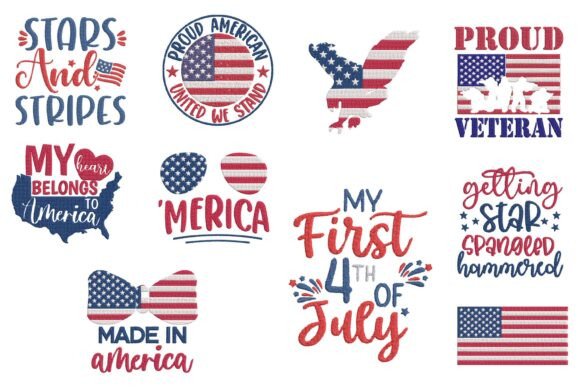
Stitch density feels intentional—not sparse, not overwhelming. It’s dense enough to feel substantial on a finished product, but open enough to avoid stiffness on lightweight garments. That balance supports both personal projects and commercial embroidery. If you're an Etsy seller bundling this as part of a “Patriotic Bundle,” it pairs naturally with simpler star motifs or block-letter “USA” files—not competing, just complementing.
One subtle strength: it doesn’t scream “craft fair.” It looks like something you’d find in a thoughtful independent shop—clean, respectful of the symbol, and quietly confident. That builds customer trust. People don’t buy patriotic designs because they’re loud; they buy them because they feel genuine. This one does.
For small business owners building brand consistency, the 4th of July Patriotic USA Flag holds up across formats. I used the same file for a physical embroidered patch (heat-seal backing), a digital mockup for Instagram ads, and a printed hang tag graphic—all without redesigning or redrawing. That cross-format reliability saves hours. It’s not just an embroidery file; it’s flexible design assets.
A few practical notes before you stitch:
- Always test on scrap fabric first—especially if pairing with dark or textured materials.
- Check thread color contrast early: white stars on light fabric need sharp white thread, not off-white.
- Review stitch density settings—some machines default to higher density than this design needs.
- Confirm hoop size compatibility; the full flag layout may require a 5x7 hoop minimum.
- Inspect small details at actual stitch-out size—not just on screen.
- Test on both light and dark backgrounds using grayscale mockups to assess value contrast.
- Use appropriate stabilizer: light cutaway for knits, tear-away for stable wovens, cap-adhesive for curved surfaces.
- Verify licensing terms before selling finished items or reselling the digital embroidery file.
This isn’t a “set it and forget it” design—it rewards attention. But that’s what makes it reliable for serious craft business use. Whether you’re stitching personalized gifts for neighbors, building a holiday collection for your Etsy shop, or prepping merchandise for a Fourth of July street fair, the 4th of July Patriotic USA Flag delivers clarity, consistency, and quiet confidence. It doesn’t try to do everything. It does one thing very well—and that’s exactly what handmade products need.