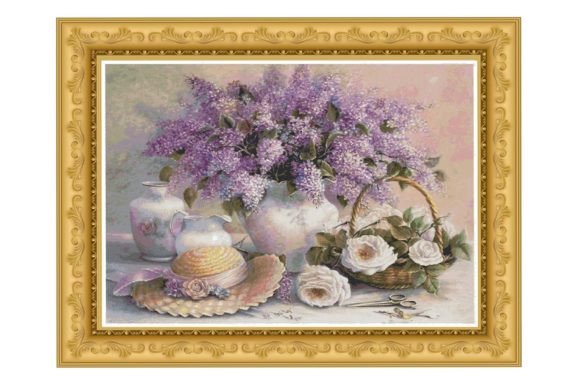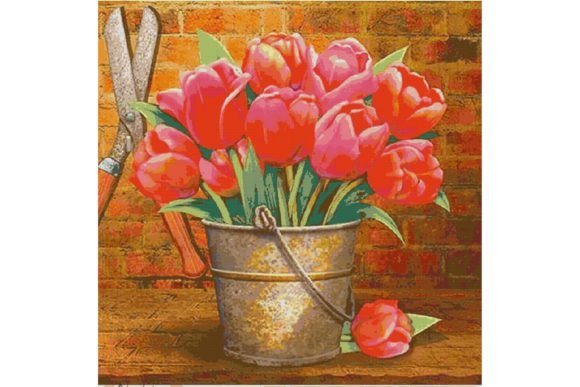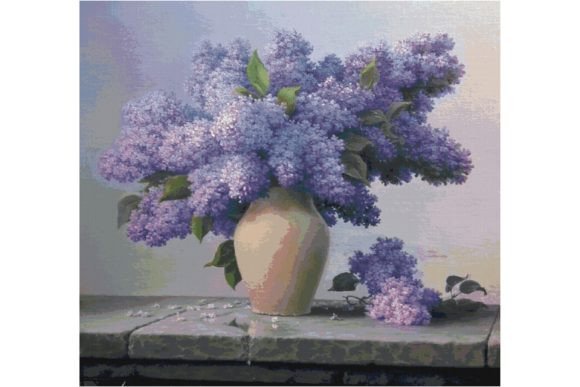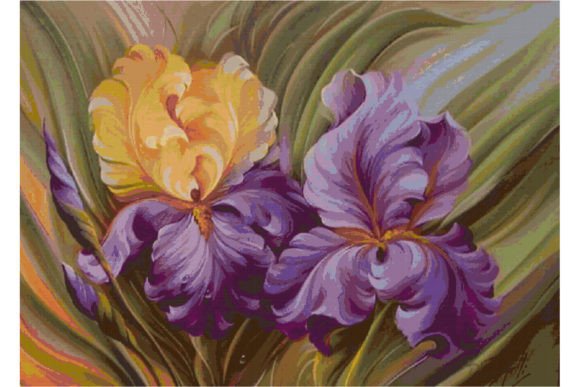
Counted Cross Stitch Pattern-Flowers 134
First Impression: Soft, Decorative, and Booth-Ready Charm
As an embroidery designer who’s prepped over 200 craft fair booths—and shipped thousands of handmade products—I opened Counted Cross Stitch Pattern-Flowers 134 expecting something gentle, intentional, and quietly versatile. It delivers exactly that. The title alone signals a classic cross stitch sensibility—no trendy slang, no forced whimsy—just clear, floral, and rooted in tradition. That’s gold for handmade markets where shoppers seek authenticity, not algorithm bait. It feels soft yet decorative, timeless but not fussy—ideal for customers browsing slowly, touching fabric, and imagining how a design lives on their favorite tote or kitchen towel.
Where It Shines: From Booth Samples to Best-Selling Products
Counted Cross Stitch Pattern-Flowers 134 isn’t just another digital embroidery file—it’s a visual anchor. On a folded tea towel laid across a wooden crate? Instant warmth. Stitched onto the chest of a linen apron? Effortless charm. As a small embroidered patch sewn onto a denim market bag? A subtle signature of care. Unlike dense machine embroidery designs that shout, this pattern whispers quality—and that’s what makes it stick in memory at a crowded craft fair.
It works especially well as a focal point on pillow covers and tote bag designs, where its balanced floral motif reads clearly from three feet away. For Etsy sellers and small shop owners, it’s highly adaptable: scale it up for a bold statement on a canvas pouch or down for delicate accent work on a child’s cap. Because it’s charted for 14-count fabric, it translates cleanly into printable mockups and commercial embroidery workflows—just confirm your digitizer understands the stitch density before converting to an embroidery file.
Real-World Production Notes Every Designer Should Check
Before cutting fabric or loading hoops, test Counted Cross Stitch Pattern-Flowers 134 on scrap material that matches your final product. Why? Because while the PDF charts are large and easy to read (a huge plus), real-world variables change everything:
- Fabric texture matters: On thick, nubby tea towels or textured linen aprons, fine stems or tight petal clusters may blur—review spacing and consider simplifying tiny details if needed.
- Dark fabric demands contrast: If stitching on navy or charcoal, verify thread colors deliver legibility—especially in shaded areas where stitch density increases.
- Curved surfaces need adaptation: Caps and curved pouches compress design flow—mock up first to ensure flower alignment stays natural, not stretched or skewed.
- Hoop size & stabilizer choice: This isn’t a high-stress geometric pattern, but medium stitch density still benefits from medium-weight cutaway stabilizer on lightweight cottons or knits.
Selling Smarter: Visual Appeal, Value, and Booth Impact
In a sea of laser-cut wood signs and glitter pens, Counted Cross Stitch Pattern-Flowers 134 stands out by leaning into handmade sincerity. It doesn’t compete with flash—it invites pause. At a craft fair, that pause turns into conversation. Buyers ask, “Did you stitch that yourself?” “What fabric did you use?” “Can I get one on a tea towel?” That’s engagement you can’t buy with signage.
It also lifts perceived value without raising price points. A simple cotton tote becomes a giftable handmade product when anchored by this kind of thoughtful design. For boutique makers building brand consistency, it fits seamlessly into soft-color palettes and earthy aesthetics—no rebranding required. And because it’s scalable and clean-lined, it photographs beautifully for Etsy listings and Instagram carousels, reducing your need for heavy editing or staging.
Why This Design Fits the Modern Handmade Economy
Today’s creative entrepreneurs—Etsy sellers, Cricut crafters turning digital files into physical goods, and embroidery business owners launching small-batch collections—need assets that balance beauty with practicality. Counted Cross Stitch Pattern-Flowers 134 checks both boxes. It’s not overly complex (no tiny lettering or micro-details that vanish at 2 inches), yet it’s distinctive enough to avoid looking generic next to mass-produced prints.
As a graphics asset, it’s endlessly repurposable: turn it into iron-on patches, sublimate it onto ceramic mugs (using the PDF as a reference layout), or pair it with coordinating hand-lettered tags for cohesive gift sets. Its lack of text or seasonal specificity means it sells year-round—not just in spring. And because it’s delivered as a downloadable PDF chart—not a kit—it gives designers full control over thread palette, fabric selection, and finishing technique: critical for maintaining brand voice and quality standards.
Critical Pre-Production Checklist
Before stitching your first batch of finished products using Counted Cross Stitch Pattern-Flowers 134, run through these non-negotiable steps:
- Create at least one real mockup—don’t rely solely on digital previews.
- Compare thread colors across multiple fabric swatches; lighting changes everything.
- Confirm commercial licensing terms directly with the seller—this is essential for any small shop product intended for resale.
- Review stitch density in petal centers and layered stems—if they feel too tight for your chosen fabric weight, adjust spacing or simplify.
- Double-check hoop size compatibility—some floral motifs require larger hoops for smooth tension, especially on rigid fabrics like canvas tote bags.
Final Thought: A Quiet Workhorse for Creative Business Owners
Counted Cross Stitch Pattern-Flowers 134 won’t go viral overnight—but it will sell steadily, photograph well, and earn repeat praise at every craft fair booth it anchors. It’s the kind of cross stitch pattern that builds trust: with customers who recognize craftsmanship, with buyers who return for matching pieces, and with makers who finally find a design that’s as reliable to produce as it is lovely to behold. In the handmade economy, that’s not just smart design—it’s sustainable business.