South Korea Flag Embroidery Design Review
As an embroidery designer who’s developed over 200 personalized gift collections for boutique shops and Etsy sellers, I tested the South Korea Flag machine embroidery design across six real-world product categories — baby blankets, kitchen towels, pillow covers, wedding keepsake napkins, nursery wall hangings, and custom tote bags. My goal? To see whether this Asia-themed embroidery file delivers authenticity, versatility, and emotional resonance — not just visual accuracy.
First Impressions: Elegant, Grounded, and Quietly Meaningful
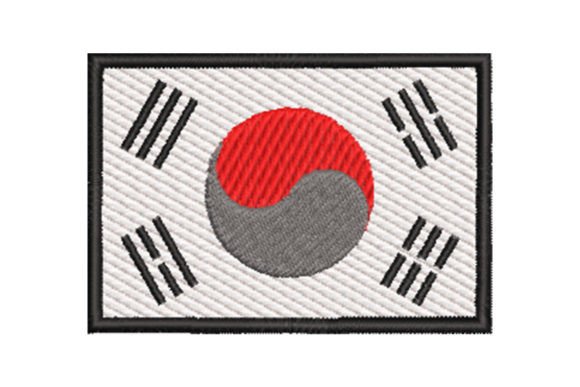
The South Korea Flag design arrives with a calm, balanced presence. It doesn’t shout — it invites. Unlike many national flag embroideries that lean into bold saturation or rigid geometry, this one breathes. The Taegeuk symbol is rendered with subtle gradation in thread colors, and the four gwae trigrams are cleanly spaced, legible even at 3.5 inches wide. There’s no pixelation, no jagged edges — just smooth satin and fill stitches that suggest intentionality. It feels elegant, classic, and quietly handmade, not mass-produced. For customers seeking cultural pride without cliché — adoptive families, Korean-American couples, study-abroad graduates, or heritage-conscious gift buyers — this design lands with sincerity.
Where It Shines: Real Personalized Gift Applications
This South Korea Flag embroidery file excels where meaning meets everyday use:
- Baby embroidery: Stitched on organic cotton swaddle blankets or onesies (with careful placement away from seams), it adds gentle cultural identity — ideal for adoption announcements or bilingual nursery decor.
- Wedding gift: Embroidered on linen napkins or monogrammed handkerchiefs, it honors Korean heritage alongside modern vows — especially resonant for intercultural ceremonies.
- Nursery decor & pillow covers: Paired with soft neutrals (oatmeal linen, heather gray velvet), the flag becomes a quiet focal point — respectful, refined, never kitschy.
- Embroidered towel & apron: Works beautifully on medium-weight terry and midweight cotton twill. The clean lines hold up well after washing, and the design reads clearly even when slightly damp.
- Tote bags & blanket embroidery: At 4–5 inches wide, it anchors the front panel without overwhelming. Great for craft fairs or Etsy listings where visual clarity drives click-throughs.
- Custom order previews: Because the stitch density is moderate (not overly dense), it renders cleanly in digital mockups — making printable mockups and social media previews feel trustworthy and professional.
Where to Use With Care
Like any thoughtful machine embroidery design, the South Korea Flag has boundaries — and honoring them protects both quality and customer trust:
- Avoid tiny lettering or fine detail overlays: The trigrams aren’t designed for sub-2-inch scaling. Don’t try to add names or dates inside the Taegeuk — it’ll blur.
- Texture matters: On heavily napped fleece or thick waffle-weave towels, test first. Excess pile can obscure the trigram outlines. A tear-away + cut-away stabilizer combo usually solves this.
- Stretchy fabrics need caution: Skip direct embroidery on newborn bodysuits or stretch-knit baby blankets unless you’re using high-quality adhesive stabilizer and reducing stitch speed.
- Curved surfaces (mugs, curved tote straps) require repositioning: This isn’t a wrap-around design — it’s meant for flat or gently contoured panels.
- Dark fabric demands contrast testing: The traditional red and blue threads pop on ivory or light gray, but on navy or charcoal, verify thread color readability in your final hoop size — some blues recede.
- Frequent-wash items: While durable, always pre-wash fabric and use polyester thread for embroidered towels or baby blankets intended for daily use.
How It Elevates Your Handmade Product
The South Korea Flag does more than decorate — it deepens perceived value. Customers browsing Etsy or local gift shops don’t just see a flag; they sense care, cultural awareness, and craftsmanship. That translates directly to higher cart conversion and repeat buyers. When photographed well (natural light, neutral background, fabric texture visible), this design communicates handmade quality — no stock-photo gloss needed. It also builds emotional connection: grandparents ordering a blanket for a newly adopted granddaughter, a bride stitching her Korean grandmother’s favorite motif onto wedding favors, or a small shop owner curating a “Heritage & Home” collection. That resonance makes your small shop product feel personal, not transactional.
Practical Embroidery Notes Before You Stitch
Before adding the South Korea Flag to live listings or fulfilling orders, do these five checks:
- Test on scrap fabric — same type, same color, same wash prep as your finished product.
- Confirm thread color contrast on both light and dark backgrounds. Red-on-black may need a brighter red or white outline.
- Verify hoop size compatibility — does it fit comfortably within your standard hoops without re-hooping?
- Review stitch density — if it’s very dense, reduce underlay or adjust tension for delicate fabrics.
- Use appropriate stabilizer — medium-weight cut-away for knits, tear-away for stable wovens, and fusible + tear-away for towels.
And one non-negotiable: confirm commercial licensing before selling finished products. Since this is a digital embroidery file, ensure your license permits resale of physical goods — especially important for Etsy sellers and wholesale partners.
Final Thought: A Design That Honors More Than Geography
The South Korea Flag isn’t just another embroidery file — it’s a quiet vessel for story, belonging, and celebration. When used intentionally — on a baby’s first blanket, a wedding guest towel, or a handmade tote carried through Seoul’s Insadong market — it transforms from decoration into dignity. For crafters, gift shop owners, and digital product sellers alike, it’s a versatile, emotionally intelligent addition to your personalized gift toolkit. Just remember: authenticity begins with attention — to fabric, to thread, to context, and to the people who’ll hold what you make.