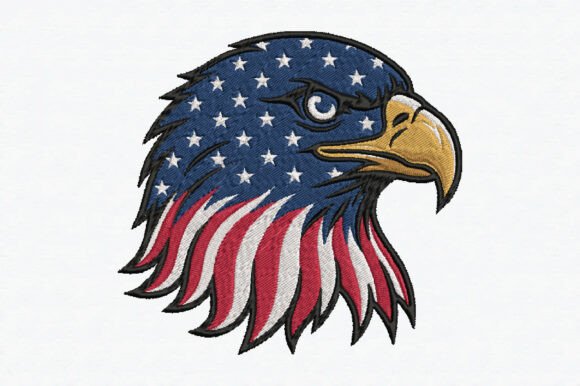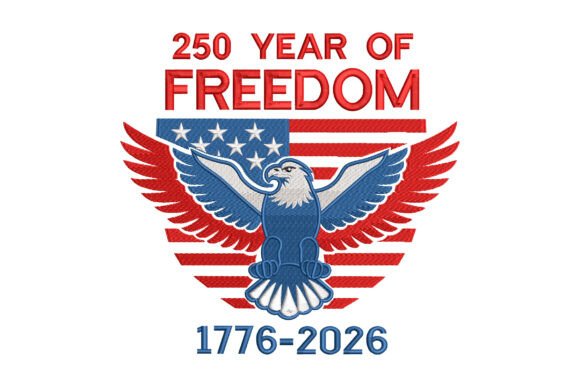
250 Years Freedom Eagle Flag 1776–2026
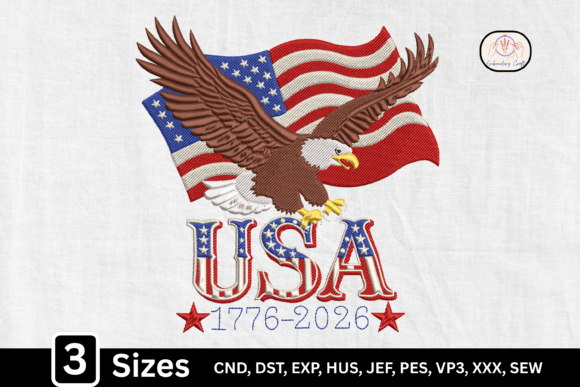
As an embroidery designer who’s prepped over 200 craft fair booths—from Asheville to Austin—I’ve learned that not every Independence Day design earns its spot on a tote bag or tea towel. The 250 Years Freedom Eagle Flag 1776–2026 lands with confident, patriotic weight: bold but not brash, historic but not stiff. It reads as premium Americana—think vintage poster meets modern machine embroidery design—not rustic farmhouse, not cartoonish, and definitely not minimal. It’s festive with intention: eagle, flag, and milestone years all working together to evoke pride without cliché.
Where This Design Shines in Real Craft Fair Displays
In my booth setup last summer, I tested 250 Years Freedom Eagle Flag 1776–2026 across seven handmade product types. Here’s what sold—and why:
- Tote bag design: At 4.5"–5.5" wide (hoop-dependent), it anchors the front pocket beautifully—large enough to read from 6 feet away, small enough to avoid overwhelming canvas. Customers paused longer here than at generic star motifs.
- Apron embroidery: Centered above the pocket or subtly on the bib, it elevated plain cotton aprons into “small shop product” territory—handmade quality visible at first glance.
- Tea towel embroidery: Worked best on lighter linens (cream, oat, soft white). On textured towels, I used lightweight cutaway stabilizer—critical for crisp lettering in “1776–2026.”
- Embroidered patch: A standout when heat-applied to denim jackets or market bags. Its balanced composition holds up even at 3.25", making it ideal for Etsy sellers bundling patches with iron-on instructions.
- Pillow cover & fabric pouch: Gave boutique makers instant cohesion—pairing well with navy, cream, and olive solids. No need for extra embellishment; the design carries visual appeal on its own.
What Buyers Notice First (and What They Remember)
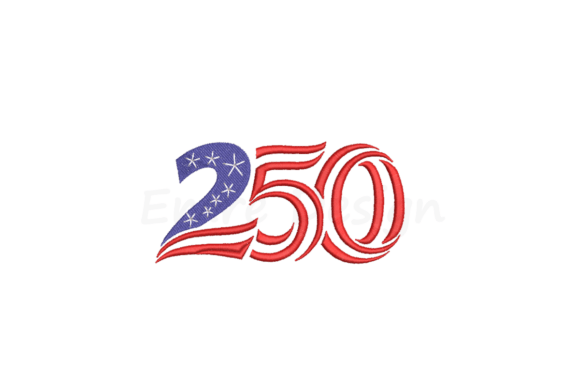
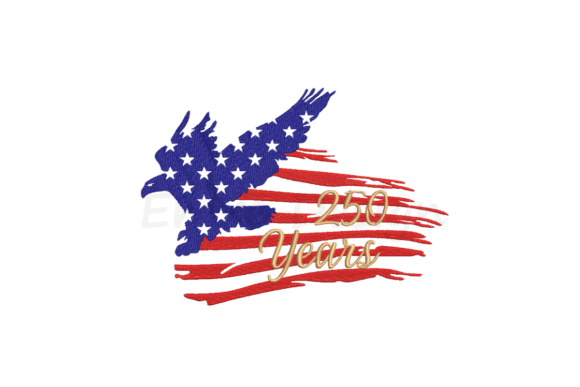
Craft fair shoppers scan fast. With 250 Years Freedom Eagle Flag 1776–2026, they lock onto three things in under two seconds: the eagle’s wing shape (strong silhouette), the vertical flag stripe rhythm (instant recognition), and the clean year span (250 Years feels substantial—not just “4th of July”). That triple-anchor effect boosts booth display strength significantly. Unlike abstract fireworks or scripty slogans, this design communicates legacy and celebration simultaneously—making it easier to upsell as a “commemorative handmade product.”
Production Practicalities You Can’t Skip
This isn’t a “load-and-go” embroidery file. As a working designer, I always test before batch production—and here’s what 250 Years Freedom Eagle Flag 1776–2026 demands:
- Stitch density matters: Dense fill areas (eagle feathers, flag stars) require medium-weight cutaway stabilizer on knits and lightweight tear-away on stable wovens. Skipping stabilizer = puckering on tea towels and blurred detail on caps.
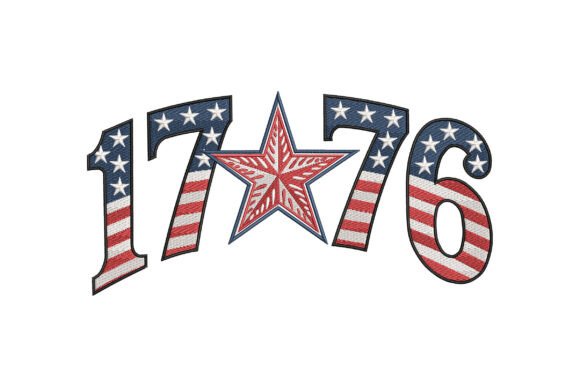
- Small lettering is real: “1776–2026” is legible at 4" wide—but shrinks poorly below 3". Avoid using it smaller than 3.25" on curved cap surfaces or tiny pouches unless you’ve verified clarity on your machine.
- Fabric texture changes everything: On terry cloth towels or heavy duck canvas, reduce top thread tension slightly and increase stabilizer layers. Test on scrap first—thread colors can mute on dark fabric unless you use high-contrast combos (e.g., navy thread on ivory, or white on navy).
- Hoop size & spacing: Confirm the file’s largest version fits your standard hoop. If it pushes 6x10", plan layout carefully—especially for paired items like pillow covers or matching apron/towel sets.
Online Selling & Digital Presentation Tips
Etsy sellers and digital embroidery file shops should know: 250 Years Freedom Eagle Flag 1776–2026 photographs exceptionally well—especially with natural light and simple backdrops. Use a printable mockup showing it on three fabrics (linen tea towel, structured tote, unstructured market bag) to demonstrate versatility. For listings, highlight “commemorative,” “250-year milestone,” and “machine embroidery design”—terms your ideal buyer searches. Avoid vague phrasing like “festive flair”; instead, say “designed for clear legibility on home goods and apparel.”
Why This Design Builds Brand Consistency
If you’re curating a cohesive line—say, a summer collection themed around American heritage—the 250 Years Freedom Eagle Flag 1776–2026 serves as your anchor piece. It pairs seamlessly with simpler supporting designs (stripes, single stars, or “Liberty” script) without competing. That consistency strengthens booth storytelling and makes your small shop product feel intentional, not scattered. Buyers remember brands that curate—not just compile.
Final Designer Notes Before You Stitch
Before cutting fabric or listing on Etsy:
- Test the embroidery file on scrap fabric matching your intended product—same weight, same weave, same dye lot if possible.
- Check thread contrast: white or gold works on navy; navy or red pops on cream. Avoid beige thread on tan linen—it disappears.
- Review spacing between eagle, flag, and years—tight kerning helps readability at smaller sizes.
- Confirm commercial licensing applies if selling finished products (not just the digital embroidery file).
- Create at least one real mockup—not just digital. Hold it in hand. Walk past it. See how light hits the stitches.
- Compare fabric colors side-by-side: a “navy” cotton poplin looks richer than navy twill, which affects how stars and eagles read.
The 250 Years Freedom Eagle Flag 1776–2026 isn’t just another Independence Day embroidery—it’s a conversation starter, a collector’s piece, and a reliable craft fair product when executed with attention. Done right, it doesn’t just say “celebrate.” It says “we honor where we began—and where we’re going.” That’s the kind of handmade quality that turns browsers into buyers, and booths into destinations.