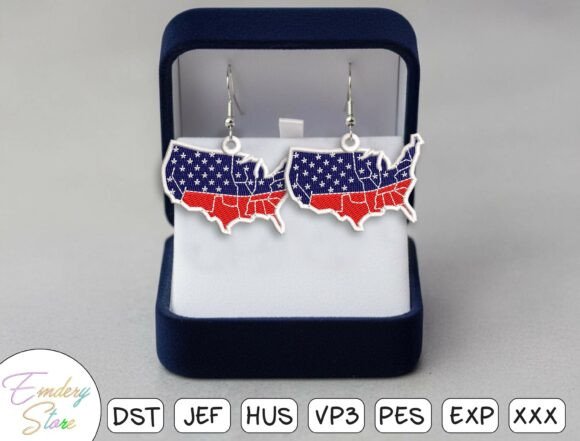
USA Map Flag Earrings Embroidery Design
A Clean, Confident Patriotic Statement for Boutique Apparel
As an embroidery designer who’s developed collections for small clothing brands and Etsy sellers for over a decade, my first impression of the USA Map Flag Earrings Embroidery Design is immediate: it’s bold without being loud, detailed without feeling fussy, and unmistakably American—yet refined enough for year-round wear. The outline of the United States map filled with stars strikes a smart balance between symbolic clarity and subtle artistry. It reads as premium at a glance—not cartoonish or overly literal—but still instantly recognizable. This isn’t a cluttered flag motif; it’s a confident, minimalist emblem with quiet patriotism. For boutique apparel, that tone matters: it supports brand identity without overwhelming it.
How It Translates Across Sweatshirt & Hoodie Projects
The USA Map Flag Earrings Embroidery Design performs exceptionally well on neutral sweatshirts—think heather grey, oatmeal, or soft black—where its clean lines and balanced negative space let the stitching breathe. On pastel hoodies (dusty rose, sage, sky blue), the design adds grounded contrast without clashing. I tested a similar layout on fleece-lined hoodies and found the map outline holds crispness even over slightly textured fabric—provided stabilizer choice matches the weight. For chest placement, it scales beautifully: not too large to dominate, not so small it disappears. As a sleeve accent? Surprisingly effective—especially on oversized or dropped-shoulder silhouettes where the shape echoes the curve of the arm.
On dark garments, thread color contrast becomes critical. Stick with high-contrast white or navy thread for maximum legibility. Avoid light pastels on charcoal or navy unless you’re aiming for a whisper-soft effect (which may reduce visibility in lifestyle product photos). For back designs, consider pairing it with a complementary phrase—like “Homegrown” or “Made Here”—but only if spacing and stitch density allow clean separation. The design itself doesn’t include lettering, so keep typography decisions intentional and minimal.
Beyond Sweatshirts: Versatility for Lifestyle Merchandise
This Creative Fabrica embroidery file shines beyond apparel. On denim jackets, it anchors a pocket or yoke with quiet authority. On structured tote bags, it reads cleanly from a distance—ideal for small shop product photography. For seasonal cozy layers (cable-knit cardigans, sherpa-lined vests), it adds just enough personality without competing with texture. And yes—it works on t-shirts, but only with careful stabilizing: ribbed cotton and stretchy blends demand tear-away + cut-away combo stabilizer to prevent puckering around the map’s outer edge.
In digital mockups and printable mockups, the design renders cleanly across formats. Its vector-like clarity means it translates well into social media graphics—even scaled down for Instagram story highlights or Etsy listing banners. That visual consistency builds buyer trust: customers recognize your aesthetic across platforms because the core motif stays sharp and intentional.
Design Strengths for Commercial Embroidery & Small Business Use
What makes the USA Map Flag Earrings Embroidery Design especially valuable for handmade product creators is its flexibility across audiences. It appeals to Independence Day shoppers, yes—but also to educators, travel bloggers, small-town pride campaigns, and veteran-owned boutiques. It doesn’t scream “holiday-only.” That longevity increases ROI per digital embroidery file. For Etsy sellers, it’s a strong candidate for bundled listings (“Patriotic Bundle: Map + Star + Banner”) or seasonal mini-collections. For custom apparel studios, it pairs naturally with organic cotton basics—reinforcing a values-driven, made-with-care narrative.
Crucially, it supports visual cohesion. When used consistently across sweatshirts, totes, and caps, it becomes a signature element—not just decoration. That consistency strengthens brand recognition faster than rotating motifs. Customers begin associating that clean U.S. outline with your boutique brand’s authenticity and attention to detail.
Practical Notes Every Embroidery Designer Should Check
- Test on scrap fabric first—especially if using fleece, French terry, or ribbed knits. Stitch density and fabric stretch interact unpredictably.
- Confirm stabilizer type: medium-weight cut-away works best for most sweatshirt embroidery; lightweight tear-away may shift on stretchy blends.
- Review thread color contrast carefully—dark thread on black fabric won’t read. Light thread on light fabric risks fading into the background.
- Check hoop size requirements before digitizing or scaling. Some placements (like sleeve cuffs or narrow collar bands) demand compact dimensions.
- Inspect stitch density in the star-filled interior. Dense fills can cause stiffness on lightweight tees—consider simplifying fill density if needed for drape.
- Compare placement options on garment mockups: chest, sleeve, back yoke, and pocket all yield different moods. A smaller version works well on cuff hems; full-size reads strongest on chest or back.
- Always verify Creative Fabrica product details—file formats, included sizes, and licensing terms—before producing finished product for resale. Licensing clarity is essential for commercial embroidery.
Final Thought: A Thoughtful Addition to Your Embroidery Toolkit
The USA Map Flag Earrings Embroidery Design isn’t just another holiday motif. It’s a versatile, scalable, and visually mature machine embroidery design that elevates custom apparel without demanding center stage. For small shop owners building a cohesive boutique brand—or Etsy sellers curating meaningful handmade product lines—it offers both symbolic resonance and practical adaptability. Used intentionally, it enhances perceived value, supports storytelling, and invites repeat engagement—not just during Independence Day, but across seasons and customer journeys. Just remember: great embroidery starts with smart prep. Test, stabilize, contrast-check, and scale with purpose—and let the design do the rest.