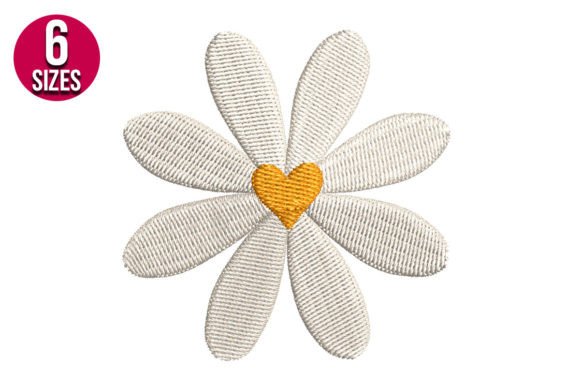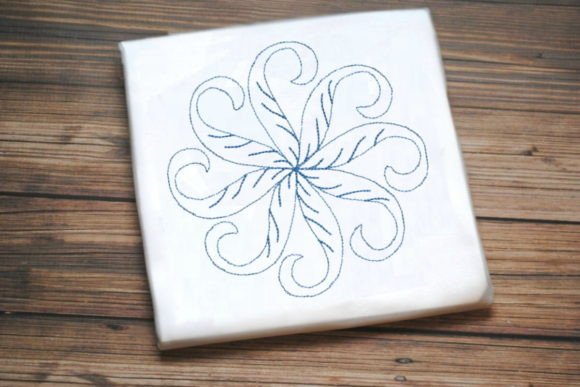
Beautiful One Line Flower
A Designer’s First Look: Graceful, Uncluttered, and Surprisingly Versatile
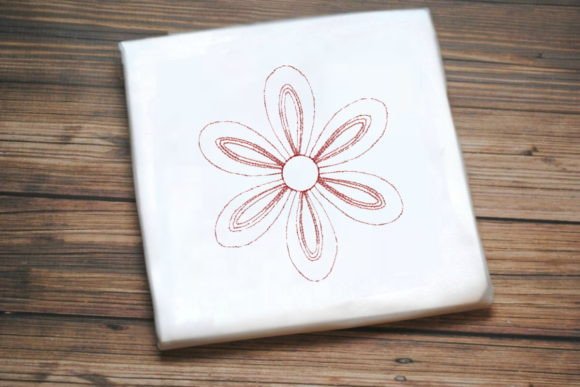
When I opened Beautiful One Line Flower for the first time—no fanfare, no overdesigned preview—I felt that quiet click of recognition. This isn’t a floral explosion or a botanical illustration. It’s a single, continuous line that curls, lifts, and settles into bloom with elegant economy. As a designer who’s stitched hundreds of floral motifs—from dense rose bouquets to minimalist daisies—I immediately sensed its strength: it breathes. There’s air in the negative space, rhythm in the curve, and intention in every subtle taper. It reads as both modern and timeless, making it ideal for projects where subtlety signals sophistication—not scarcity.
Real-World Test: Stitching It on a Linen Tea Towel for a Local Boutique
Last week, I used Beautiful One Line Flower on a set of heavyweight natural linen tea towels destined for a small-town kitchen boutique. No appliqué, no fill stitches—just clean running stitch (or a fine satin stitch, depending on thread weight) traced along that single path. The result? Crisp, confident, and quietly memorable. Customers didn’t just see “a flower”—they paused. They ran fingers over the smooth arc of the stem, noticed how the petal loop echoed the curve of the towel’s hem, and commented on how “it looked handmade, but intentional.” That’s the difference Beautiful One Line Flower makes: it elevates the handmade product without shouting about it.
Where It Shines—and Where It Needs Thoughtful Handling
Beautiful One Line Flower excels in contexts where clarity, flow, and restraint matter:
- Custom apparel: Works beautifully on crewneck sweatshirts (left chest), relaxed-fit t-shirts (back yoke), and structured caps—especially when placed above a curved seam or near a pocket edge, where its organic shape complements garment lines.
- Baby embroidery: Its simplicity avoids visual overwhelm on tiny onesies or burp cloths. Paired with soft pastel threads on Pima cotton, it reads gentle and personal—not cutesy.
- Embroidered patch: Clean outline + minimal stitch count = excellent stability and clean edges after cutting and heat-sealing. Ideal for sew-on or iron-on patches on denim jackets or backpacks.
- Holiday embroidery & wedding gifts: Stitched in ivory silk on ivory linen napkins or monogrammed onto muslin favor bags, it adds heirloom-level refinement without competing with tradition.
But here’s what I watched closely: on thin or stretchy fabric like lightweight jersey or rayon challis, the single-line nature means any puckering or shifting becomes visible. I always pair it with tear-away stabilizer *and* a light spray adhesive—never skip that step. On dark fabric, contrast matters more than usual: a 40-weight matte thread in charcoal gray won’t read as clearly as a slightly brighter heather or deep olive. And on curved surfaces like baseball caps? Test placement first. The line’s natural flow can distort if forced across too steep a dome.
What It Does for Your Craft Business—Beyond Aesthetics
As an Etsy seller and small shop product developer, I don’t just ask “Does it look nice?” I ask: “Does it build trust? Does it scale? Does it feel worth the price?” Beautiful One Line Flower answers yes—to all three. Its simplicity translates to faster stitching times (less thread breaks, fewer trims), lower digitizing overhead for custom color swaps, and strong visual cohesion across product lines. When I added it to a set of matching aprons and oven mitts for a bakery client, the motif became a quiet signature—not a logo, but a consistent note of care. Customers recognized it across items, reinforcing brand consistency without repetition fatigue.
It also strengthens giftability. A personalized tote bag with Beautiful One Line Flower near the strap feels considered—not generic. Same for a baby blanket corner or a holiday ornament hoop. That perceived intentionality raises perceived value, which directly supports pricing confidence for craft business owners.
Practical Designer Notes Before You Stitch
- Always test on scrap fabric first—especially if using textured weaves (like burlap or heavy terry) where line definition can blur.
- Review stitch density: Though described as “fun and easy to stitch,” verify that the file doesn’t pack too many tiny directional changes in tight spaces—those can slow machines or cause thread tension hiccups.
- Confirm hoop size compatibility: A design this fluid often benefits from at least a 4” x 4” hoop to maintain smooth curvature. Smaller hoops may require strategic splitting—check whether the file is pre-split or requires manual adjustment.
- Inspect corners and terminals: Does the line end cleanly? Is the start point hidden or reinforced? These details impact professionalism in the finished product.
- Test black-and-white mockups: Since it relies on line quality over color, ensure it reads strongly in grayscale previews—critical for digital embroidery file listings and printable mockups.
- Compare light vs. dark backgrounds: Not just for contrast, but for perceived weight. On black fabric, even a fine line gains presence; on ecru, it may need a slight thread weight bump (e.g., 30-weight instead of 40) to hold visual authority.
- Verify licensing: If you’re selling finished embroidered items or bundling Beautiful One Line Flower as part of a commercial embroidery project or digital product, confirm whether the license permits commercial use. Don’t assume.
Final Thought: Less Is Anchored, Not Empty
There’s a misconception that simple embroidery designs are “easier” because they’re smaller or faster. But Beautiful One Line Flower proves otherwise: simplicity demands precision, intention, and respect for negative space. It’s not filler—it’s focus. Whether you’re designing for a nursery decor line, building a cohesive set of small shop products, or creating personalized gifts that feel deeply human, this design doesn’t distract. It distills. And in today’s crowded handmade market, that kind of clarity isn’t just refreshing—it’s commercially intelligent. Beautiful One Line Flower belongs in your embroidery file library—not as a backup option, but as a go-to anchor for elegance, ease, and authenticity.